
Homeowner’s Guide to Roof Damage From Weather
Weather is one of the most common causes of roof damage. Whether it’s hail, wind, heavy rain, heat, snow, or falling debris, every storm impacts your roof differently. Understanding how to identify weather-related damage, and what to do next, can prevent costly repairs, leaks, and structural issues.
Strong wind can lift shingles, loosen flashing, or remove entire sections of roofing. Some signs of wind damage include missing shingles, creased or lifted shingles, loose or missing ridge caps, exposed nails or torn underlayment, and fallen branches or debris on the roof. Once wind breaks the seal on a shingle, even if the shingles lays back down, it is no longer waterproof.
Hail can bruise shingles and break protective coatings. Some signs of hail damage include round impact marks, loss of granules (sand-like material found in gutters), cracked or crushed shingles, dented gutters, downspouts, and indentations of vents, flashing or AC units. When hail bruises and weakens shingles, it can lead to water damage and leaks sometimes years later.
Long-term exposure to rain can wear down shingles and expose weak spots. Some signs of rain related issues include water stains on ceilings or walls, dripping in the attic, damp insulation, mold or mildew odor, and soft spots in roof decking. Water intrusion spreads quickly and will rot wood, grow mold, and compromise structural integrity very quickly.
Snow buildup and ice trap water on your roof. Some signs of cold weather damage include ice dams along roof edges, leaks when the snow starts melting, icicles forming along gutters, warped or soft decking, cracked shingles from freeze expansion. Ice pushes water under shingles, which can cause leaks.
Sun exposure dries out materials and accelerates shingle deterioration. Some signs of heat or UV damage include curling or brittle shingles, faded or blistered shingle surfaces, cracked caulk or cracked flashing sealant, increasing attic temperatures. Overheated attics can damage shingles from inside and shorten the lifespan of the shingles.
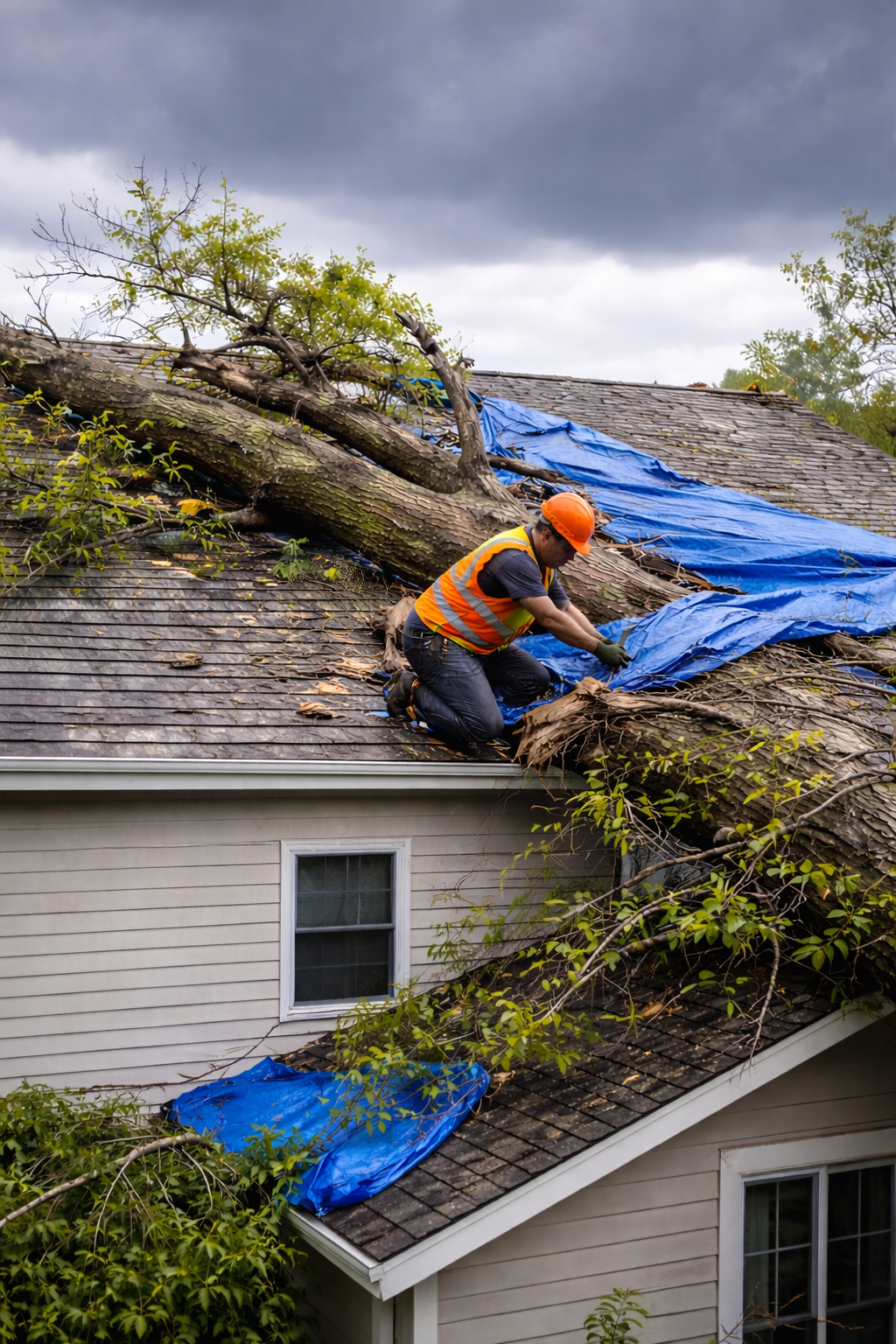
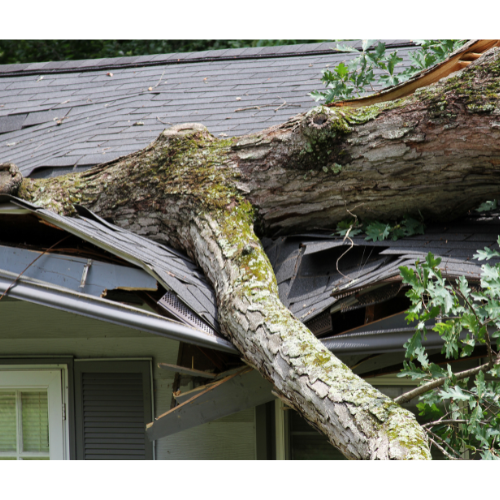
Major storms combine wind, hail, rain, and flying debris.
Common signs:
- Torn-off roofing materials
- Punctures from branches
- Damaged gutters or siding
- Exposed roof deck
- Large leaks indoors
Why severe storms are dangerous:
Damage can be immediate and catastrophic—quick action is necessary.
2. How to Check Your Roof After a Storm
Always prioritize safety. If possible, inspect from the ground first or use binoculars.
Do this after any major storm:
- Walk around your home and look for visible damage
- Check for missing or lifted shingles
- Inspect gutters and downspouts for dents or granule buildup
- Check attic for light, leaks, or damp insulation
- Look for debris on the roof
- Examine flashing around chimneys, vents, and skylights
If you’re unsure or see anything suspicious, call a roofing professional.
3. Signs You May Have Hidden Roof Damage
Not all storm damage is obvious. You may have hidden issues if you notice:
- Sudden increase in energy bills
- Musty odors in the attic
- Dehumidifier or AC running more often
- Fine cracks on interior ceilings or walls
- Stains that appear after heavy rain
Hidden damage commonly occurs with hail, wind uplift, and ice dams.
4. When You Should Call a Professional Roofer
You need a professional assessment if you see:
- Missing, torn, or lifted shingles
- Hail impact marks
- A leak of any size
- Gutter dents or granule piles
- Flashing that is cracked or bent
- Soft or spongy roof decking
- Tree limbs on the roof
A qualified roofer can tell whether your roof needs repair, replacement, or an insurance claim.
5. Can Weather Damage Be Covered by Insurance?
Most homeowners insurance policies cover sudden, accidental damage from:
- Hail
- Wind
- Tornadoes
- Hurricanes
- Fallen trees
- Impact damage
- Lightning
- Certain types of water intrusion
Insurance typically does not cover:
- Old roofs
- Wear and tear
- Rot or mold from long-term leaks
- Improper installation
- Lack of maintenance
If you suspect storm damage, act quickly—most insurance providers have filing deadlines (often 6–12 months).
6. What to Do If Your Roof Is Damaged by Weather
Step-by-step guide:
- Document everything
Take photos of damage, inside and out. - Prevent further damage
Place buckets, tarps, or temporary covers if safe. - Schedule a professional roof inspection
A roofer can confirm storm-related damage. - File an insurance claim (if applicable)
Provide date of storm + photos + roofing report. - Meet the adjuster with your roofing contractor
Helps ensure no damage is missed. - Review your settlement and begin repairs or replacement
Use a licensed and insured local roofer.
7. How to Protect Your Roof from Future Weather Damage
Preventive measures:
- Keep gutters clean
- Trim branches away from the roof
- Schedule annual roof inspections
- Ensure proper attic ventilation
- Remove debris after storms
- Install impact-resistant or architectural shingles if you live in storm-prone areas
Good maintenance prevents many weather-related problems.
Final Thoughts
Weather can damage your roof in many different ways—some obvious, some hidden. The key is catching problems early. Routine inspections, quick storm assessments, and professional checkups help protect your home and prolong the life of your roof.